Launch offer — valid today only

📄 Digital book in PDF · read it on your phone or print it

PCOS, the Cycle and the Pathology Report in Drawings Walk Into the Next GP Appointment with Clear Questions

The cycle, LH and FSH, SHBG, insulin, the 2 out of 3 diagnosis and the pathology report line by line. One topic per page: first the drawing, then what's worth remembering. 67 illustrated pages. 67 illustrated pages.

GET PCOS ILLUSTRATED

🔒 Secure checkout · PDF by email · 30-day guarantee

Every topic, its own pageEach hormone, test and sign drawn, with the explanation beside it
67 illustrated pages67 illustrated pages: 9 parts, 63 topics
Up-to-date sources2023 International PCOS Guideline, Jean Hailes and healthdirect
PDF by emailFormat

Look Inside the Book

Every page has one large drawing and a box with the numbers and terms worth knowing:

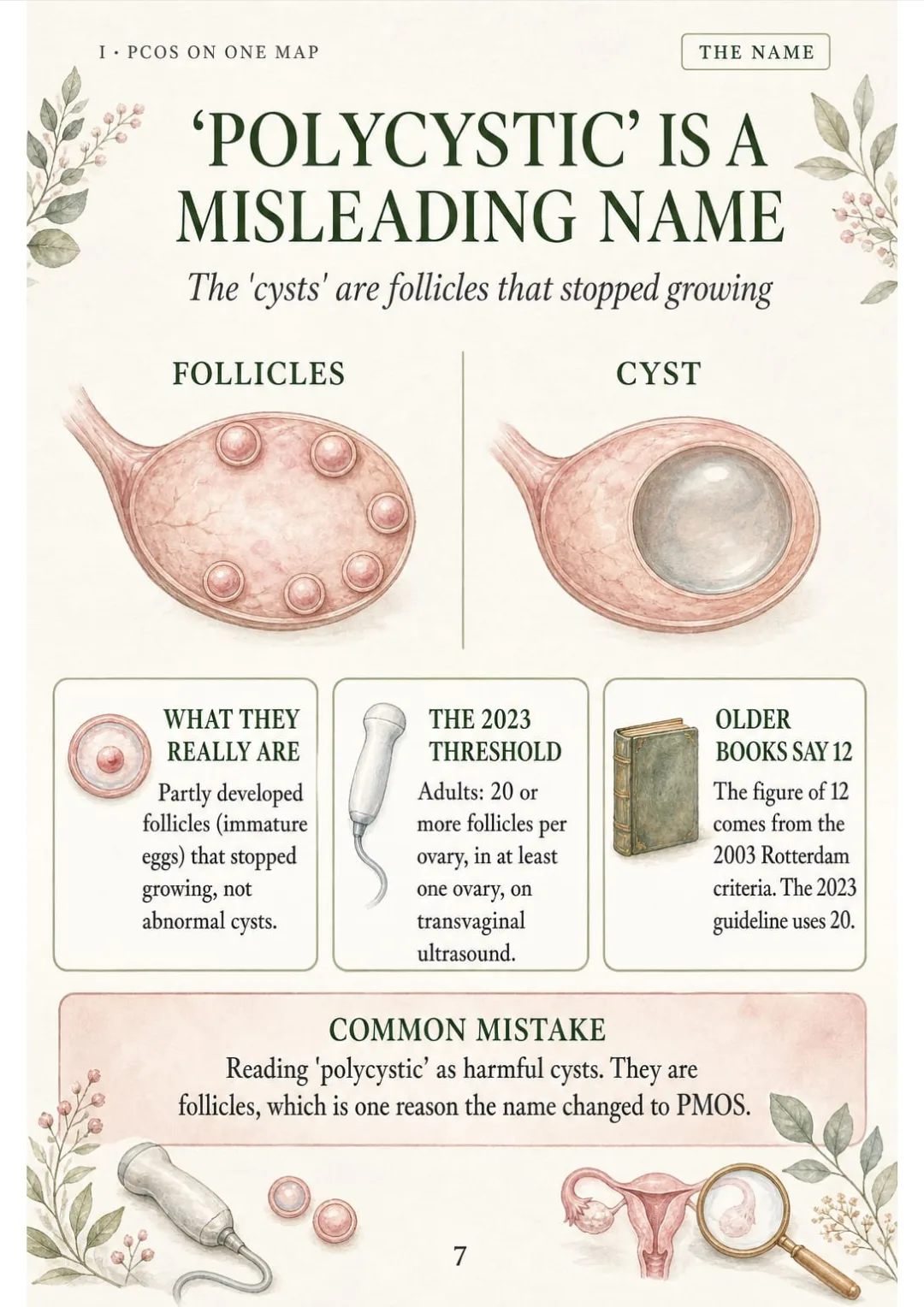
Follicles, not cysts: 20 or more per ovary is the 2023 adult threshold.
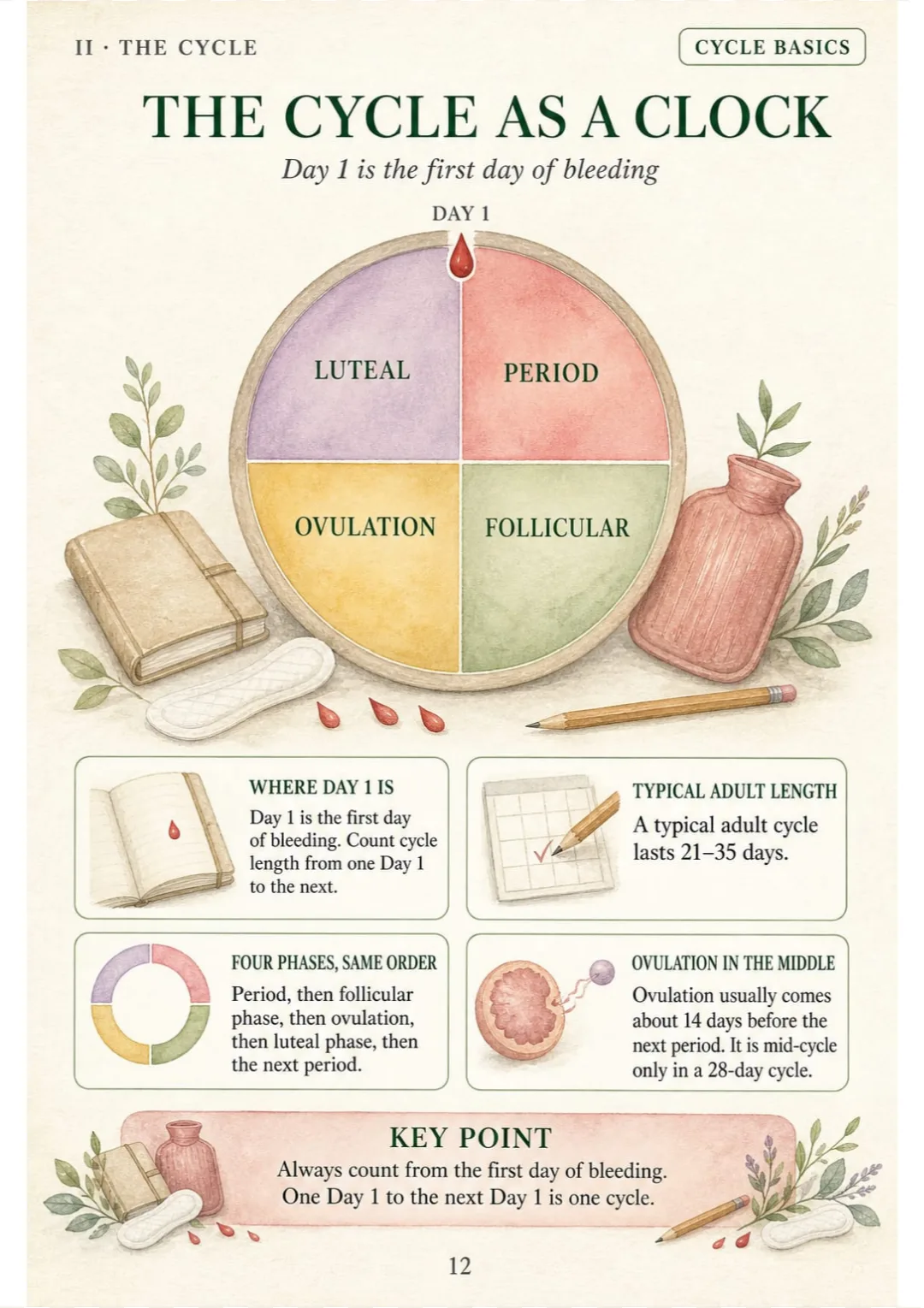
A typical adult cycle lasts 21–35 days, counted from one first day of bleeding to the next.
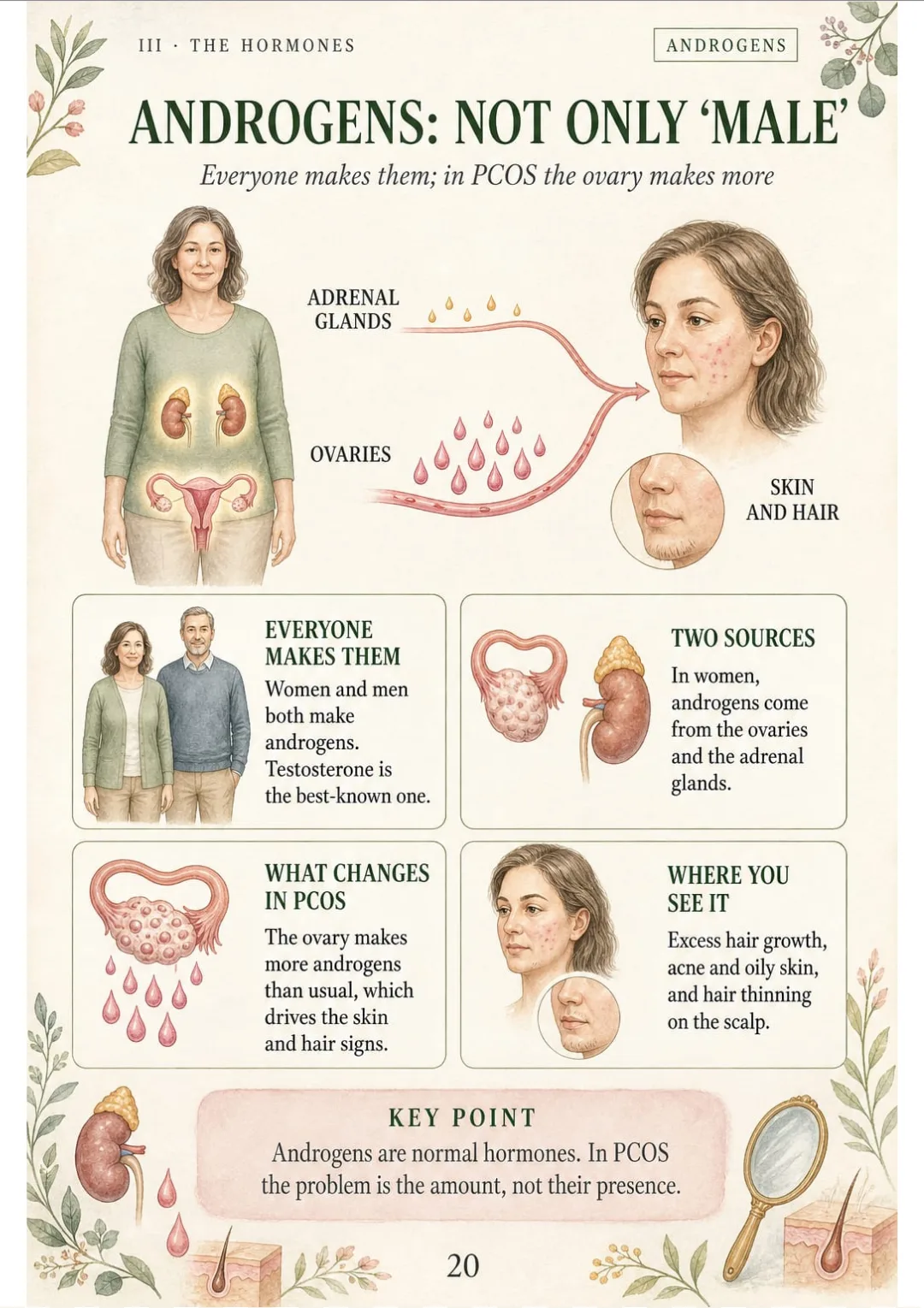
Androgens come from ovaries and adrenals — in PCOS the ovary makes more.
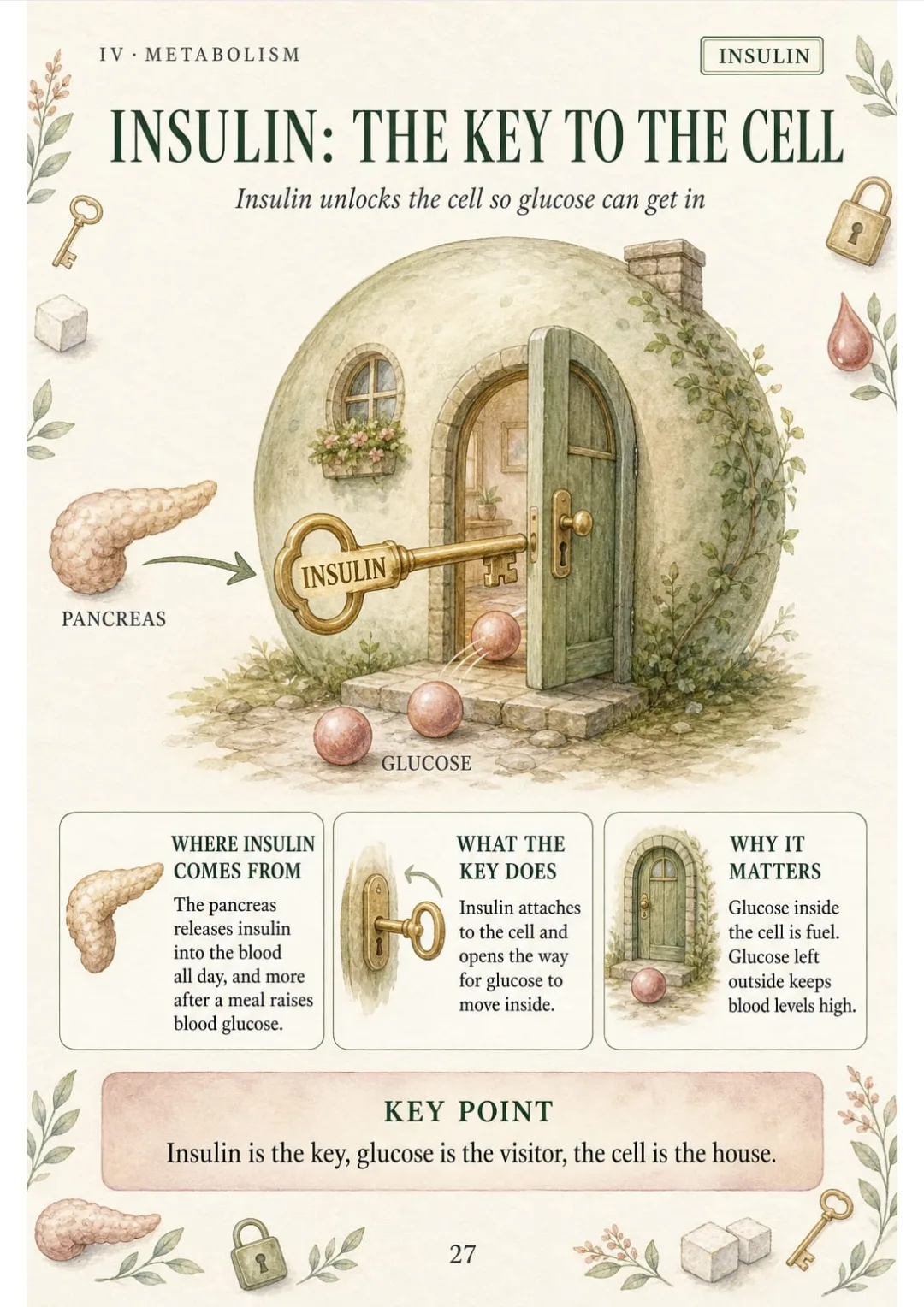
Insulin unlocks the cell so glucose can get in – drawn as a key, a door and glucose waiting outside.
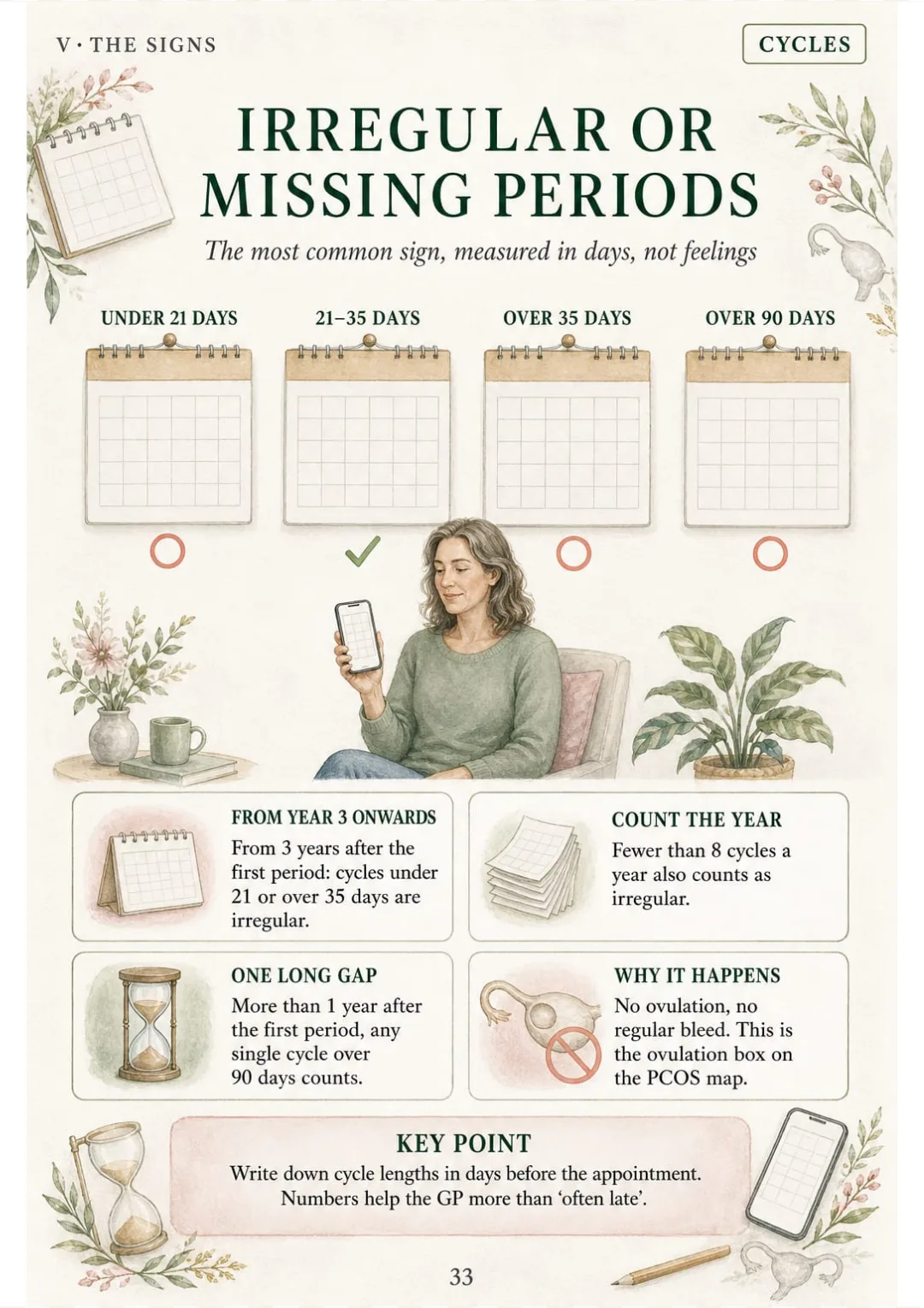
Adults: cycles under 21 or over 35 days, or fewer than 8 a year, are irregular.
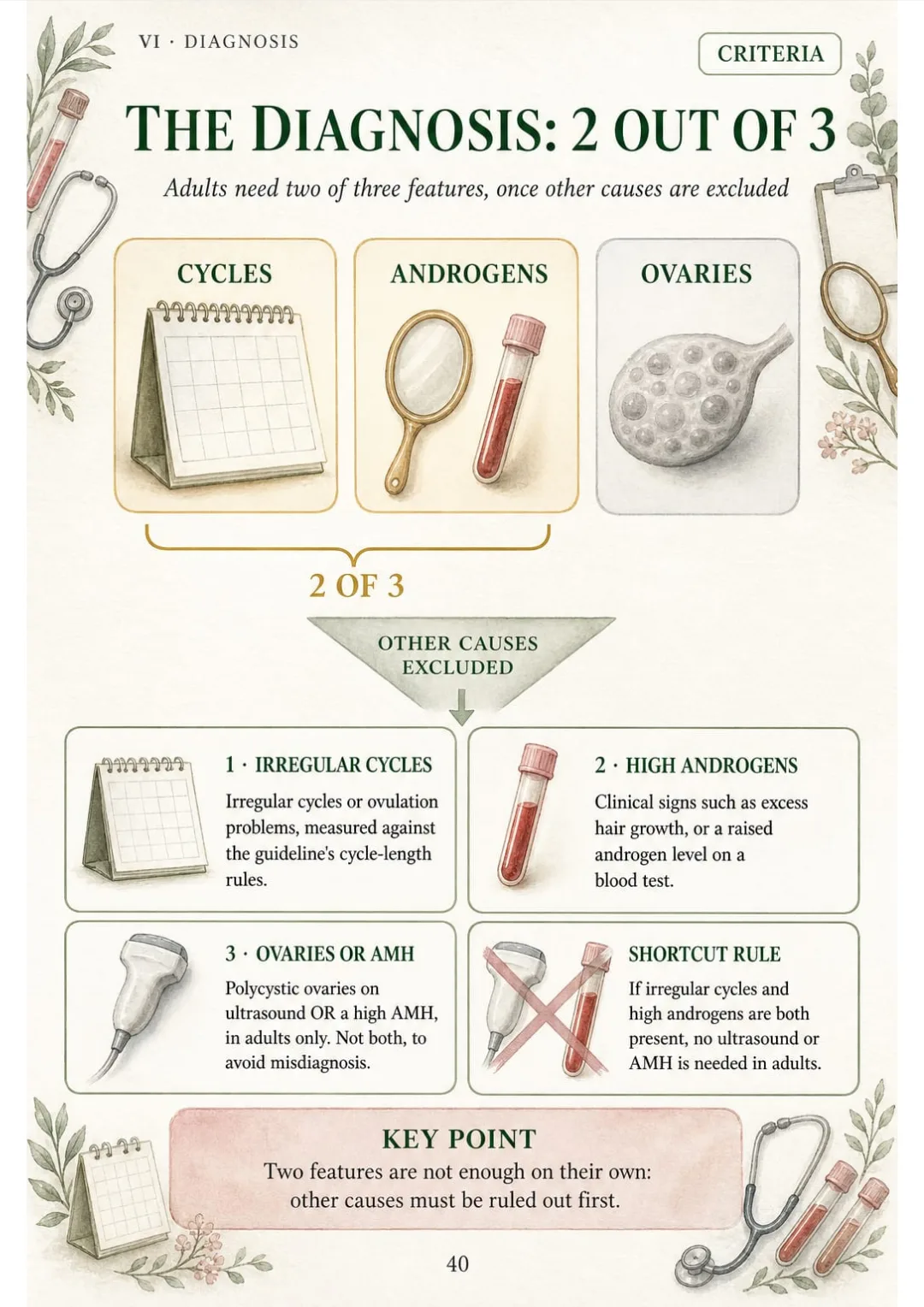
Adults: 2 of 3 — irregular cycles, high androgens, ovaries on ultrasound or high AMH.
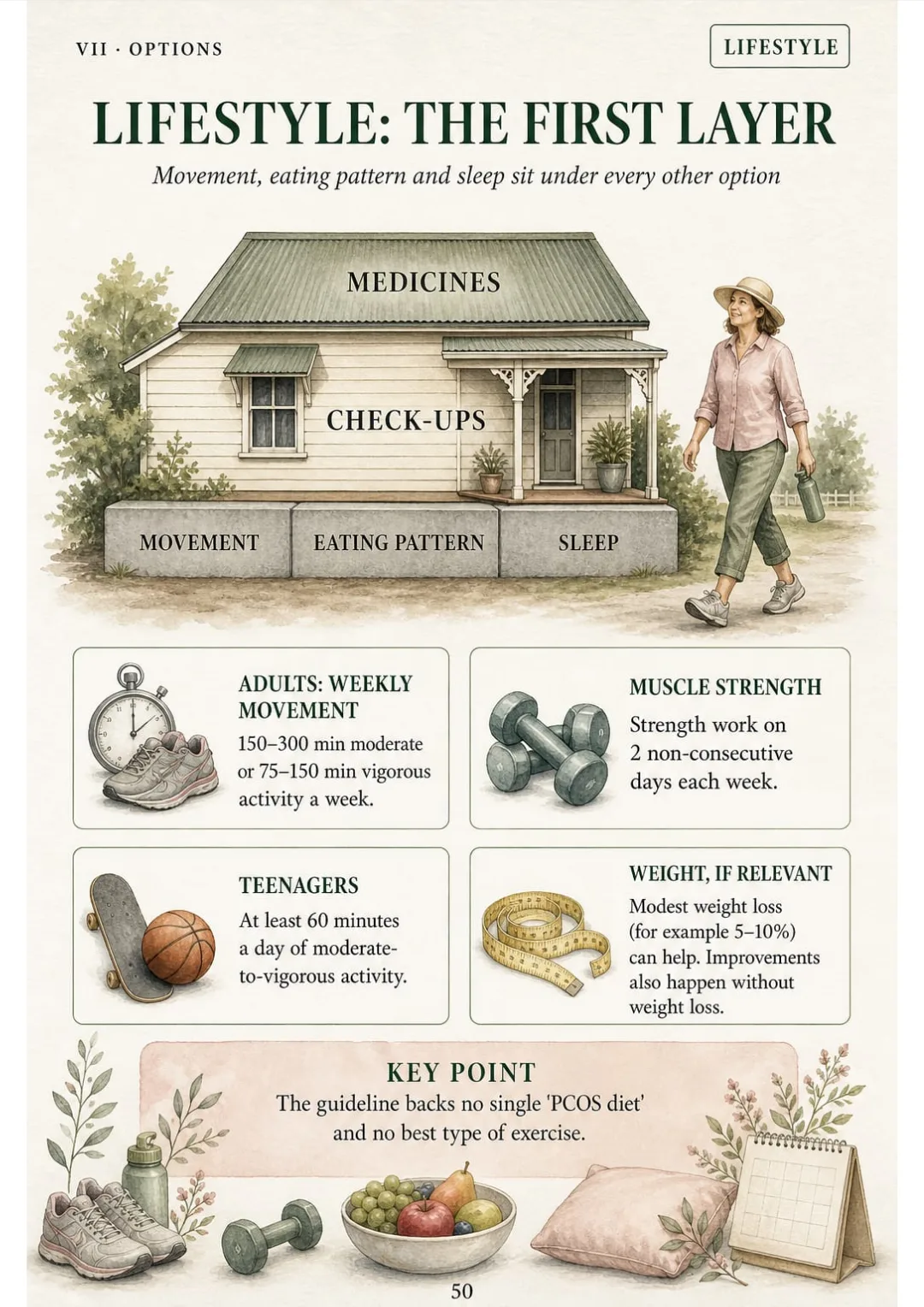
150–300 minutes of moderate activity a week, strength twice, and no single 'PCOS diet'.
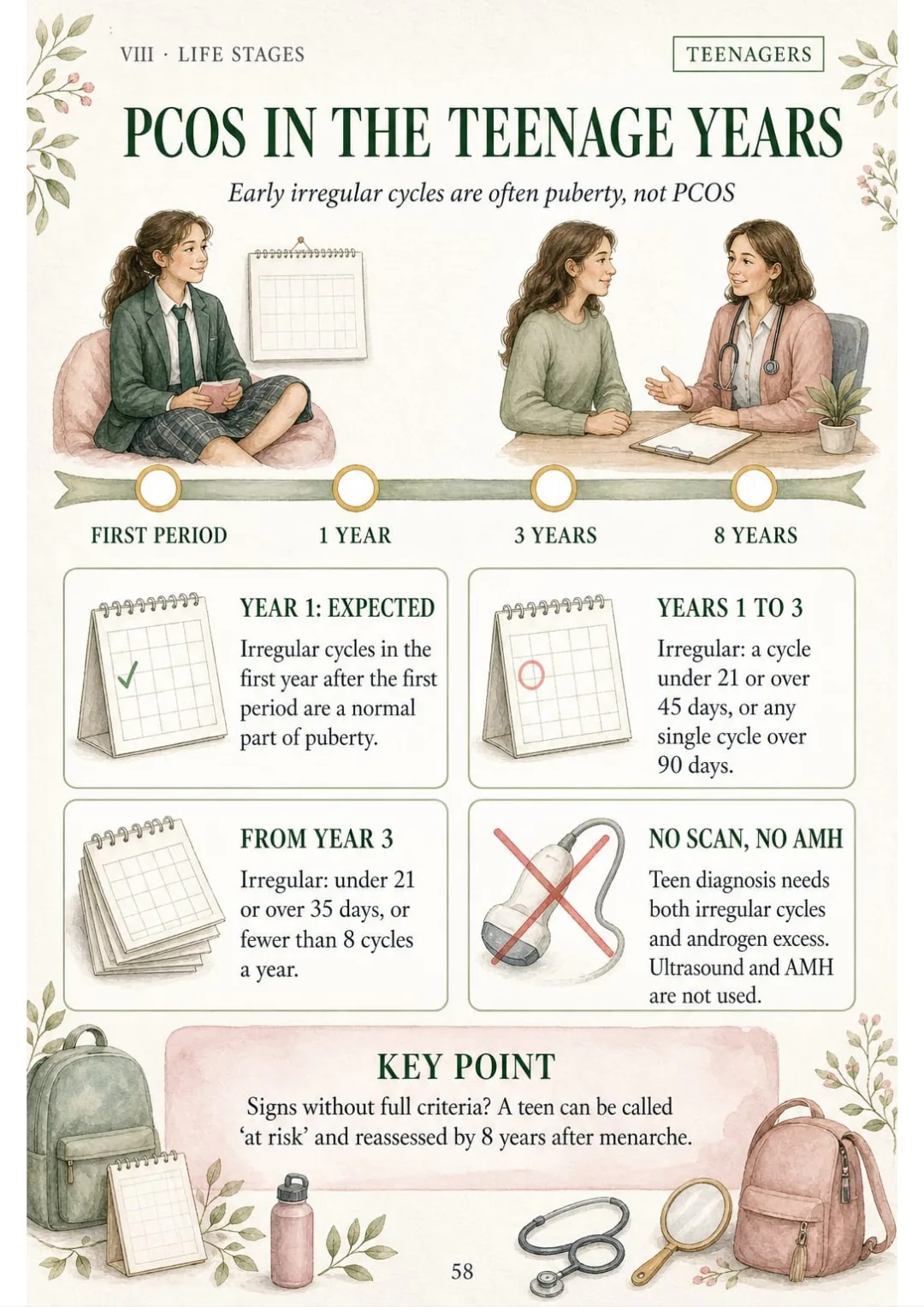
Teen PCOS: irregular cycles plus androgen excess, no ultrasound or AMH, reassess by year 8.

Swipe to see more →

These are real pages from the book. The table of contents is the full one: 9 parts and 63 topics.

The Problem Isn't You. It's How It Was Explained.

You're at the kitchen table with your daughter's pathology report. LH and FSH sit on two lines, one under the other, and what the GP said about them is already fading.

You look them up. Every site explains them in paragraphs: hypothalamus, pituitary, gonadotrophins, feedback loops. By the third paragraph the two hormones have blurred into one.

Androgens come from ovaries and adrenals — in PCOS the ovary makes more.

In the book, LH and FSH share one page: two messengers leaving the pituitary. FSH heads to the follicles and makes them grow. LH triggers ovulation and drives androgen production. One picture, two arrows.

The same goes for the cycle as a clock, SHBG as the hormone carrier, insulin as a key, the 2 out of 3 diagnosis and the pelvic ultrasound. Each one has its own page.

You get what each line on the report means, and you go into the next appointment with clear questions, without opening ten websites again.

COMPARE FOR YOURSELF

The Same Topic, Two Ways to Learn It

THIS
  • The leaflet: line after line
  • The cycle explained only in words
  • You get to the appointment still unsure
The menstrual cycle is conventionally defined as the interval commencing on the first day of menstrual bleeding and terminating on the day preceding the subsequent onset of menses. In adult women, cycle length typically ranges between 21 and 35 days, with variation largely attributable to differences in the duration of the follicular phase, whereas the luteal phase remains comparatively constant. Hypothalamic secretion of gonadotrophin-releasing hormone regulates pituitary release of follicle-stimulating hormone and luteinising hormone, which in turn govern follicular development, ovulation and subsequent progesterone production.
FOR THIS
  • The cycle drawn as a clock
  • The 21–35 days in one box
  • You see it and it makes sense
A typical adult cycle lasts 21–35 days, counted from one first day of bleeding to the next.
CONTENTS

Take a Look at the 9 Parts and 63 Topics

PCOS on one map, the menstrual cycle, the hormones, insulin and metabolism, the signs, diagnosis and the pathology report, the options a doctor may discuss, life stages and a final review: 67 pages, all illustrated.

IPCOS on One Map · pp. 5-11
  1. What PCOS is in one sentence
  2. The PCOS map: five boxes in the same order
  3. 'Polycystic' is a misleading name
  4. Why it looks different in every person
  5. What causes PCOS: what is known
  6. It is lifelong but it changes
  7. How to read this book
IIThe Menstrual Cycle · pp. 12-18
  1. The cycle as a clock
  2. The brain–ovary conversation
  3. How one follicle is chosen
  4. Ovulation: the LH surge
  5. Why no ovulation means irregular periods
  6. What 'irregular' means in numbers
  7. The womb lining and long gaps
IIIThe Hormones · pp. 19-26
  1. LH and FSH: the two messengers
  2. Androgens: not only 'male' hormones
  3. Testosterone: total and free
  4. SHBG: the hormone carrier
  5. Oestrogen and progesterone in PCOS
  6. AMH: the follicle counter
  7. DHEAS and androstenedione
  8. Hormones that can look like PCOS
IVInsulin and Metabolism · pp. 27-32
  1. Insulin as a key to the cell
  2. Insulin resistance: the stiff lock
  3. How extra insulin reaches the ovary
  4. Weight and PCOS: both directions
  5. Prediabetes and type 2 diabetes risk
  6. Cholesterol, blood pressure and the heart
VThe Signs · pp. 33-39
  1. Irregular or missing periods
  2. Excess hair growth (hirsutism)
  3. Acne and oily skin
  4. Hair thinning on the scalp
  5. Skin signs of insulin resistance
  6. Mood, sleep and body image
  7. Fertility: what PCOS does and doesn't mean
VIDiagnosis and the Pathology Report · pp. 40-49
  1. The diagnosis: 2 out of 3
  2. Teenagers are diagnosed differently
  3. The order a GP usually follows
  4. Reading a pathology report: the layout
  5. Androgen panel on the report
  6. LH, FSH and when they are taken
  7. Glucose tests: fasting, HbA1c and OGTT
  8. Lipids on the report
  9. The pill and test results
  10. The pelvic ultrasound
VIIOptions a Doctor May Discuss · pp. 50-57
  1. Lifestyle as the first layer
  2. Combined oral contraceptive pill
  3. Metformin: how it acts
  4. Anti-androgens: blocking the signal
  5. Treating hair and skin directly
  6. Ovulation induction: letrozole first
  7. Supplements and inositol: what the evidence says
  8. Who's who in PCOS care in Australia
VIIILife Stages · pp. 58-61
  1. PCOS in the teenage years
  2. PCOS and pregnancy
  3. PCOS around perimenopause
  4. Long-term health checks
IXReview and Next Appointment · pp. 62-67
  1. The whole map on one page
  2. Questions to bring to the GP
  3. Common mix-ups
  4. Supporting a daughter or partner
  5. Reliable sources and red flags online
  6. Glossary at a glance

One Page, One Topic, All Clear

Think of it this way:

The GP mentions 'high androgens' and 'insulin resistance', the ten minutes are nearly up, and you need to know which question to ask before the door closes.

In the book you open the insulin page and see a key, a door and glucose waiting outside. When the lock goes stiff, that's insulin resistance.

Adults: cycles under 21 or over 35 days, or fewer than 8 a year, are irregular.

The same with the cycle, LH and FSH, SHBG, the 2 out of 3 diagnosis and the pelvic ultrasound: each one on its own page.

PCOS Illustrated has 9 parts and 63 topics, all drawn, and it ends with the whole map on one page, questions to bring to the GP and a glossary at a glance.

What you see drawn, you don't have to memorize.

What's Inside PCOS Illustrated:

Ipp. 5-11

PCOS on One Map

What PCOS is in one sentence, the five-box map, why 'polycystic' is misleading, why it looks different in every person, what's known about the causes and how to read the book.

IIpp. 12-18

The Menstrual Cycle

The cycle as a clock, the brain–ovary conversation, how one follicle is chosen, the LH surge, what 'irregular' means in numbers and the womb lining during long gaps.

IIIpp. 19-26

The Hormones

LH and FSH, androgens, total and free testosterone, SHBG, oestrogen and progesterone, AMH, DHEAS and androstenedione, and the hormone conditions that can look like PCOS.

IVpp. 27-32

Insulin and Metabolism

Insulin as a key, insulin resistance as a stiff lock, how extra insulin reaches the ovary, weight in both directions, diabetes risk, cholesterol, blood pressure and the heart.

Vpp. 33-39

The Signs

Irregular or missing periods, excess hair, acne, scalp hair thinning, skin signs of insulin resistance, mood and sleep, and what PCOS does and doesn't mean for fertility.

VIpp. 40-49

Diagnosis and the Pathology Report

The 2 out of 3 diagnosis, how teenagers are assessed, the order a GP usually follows, the pathology report line by line, the pill and test results, and the pelvic ultrasound.

VIIpp. 50-57

Options a Doctor May Discuss

Lifestyle as the first layer, the combined pill, metformin, anti-androgens, hair and skin treatments, letrozole, what the evidence says on supplements and inositol, and who's who in Australian care.

VIIIpp. 58-61

Life Stages

PCOS in the teenage years, in pregnancy, around perimenopause, and the long-term health checks.

IXpp. 62-67

Review and Next Appointment

The whole map on one page, questions to bring to the GP, common mix-ups, supporting a daughter or partner, reliable sources online and a glossary at a glance.

At the end of the book: The whole map on one page, questions to bring to the GP, common mix-ups and a glossary at a glance.
Plus: 2 Free Books

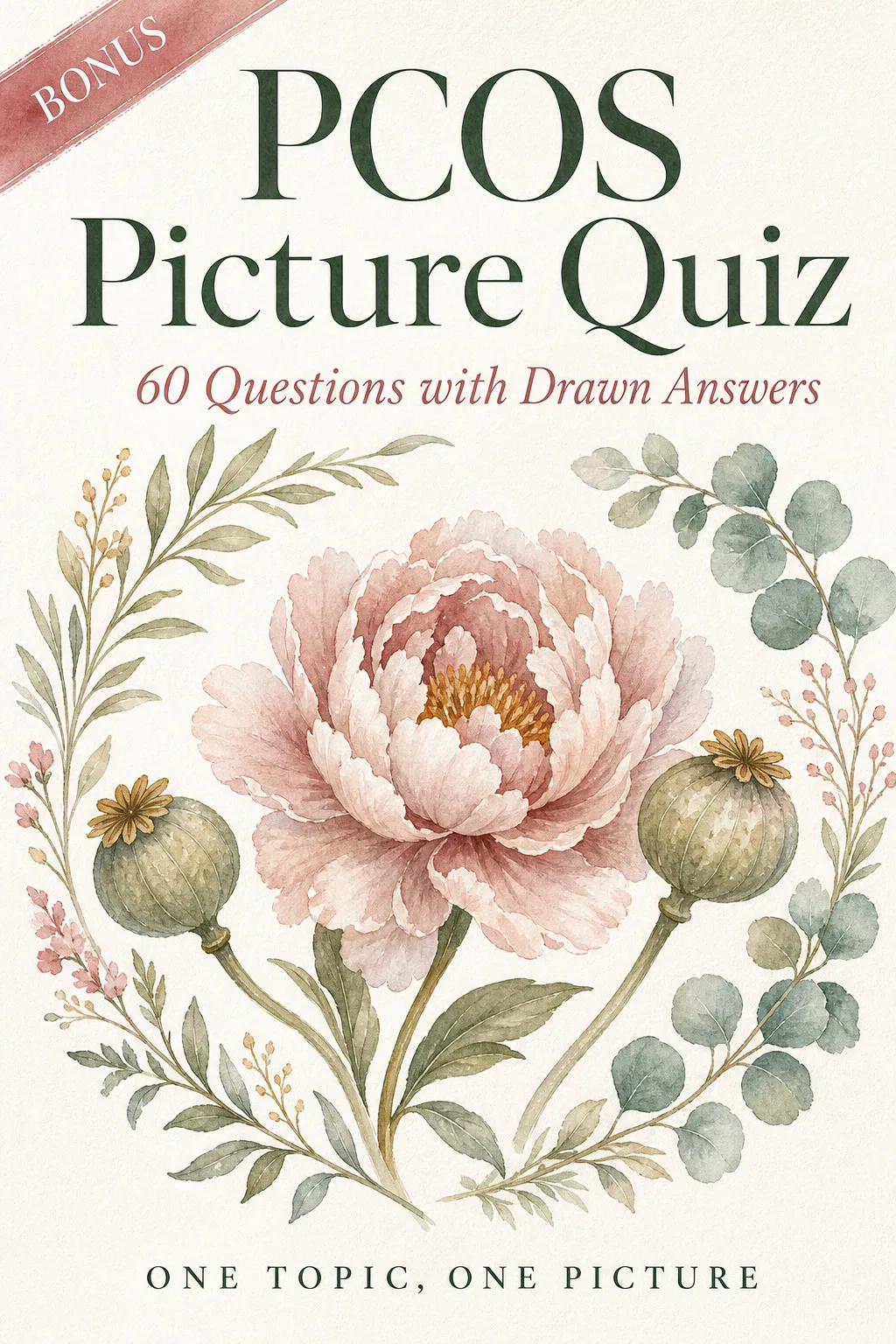
PCOS Picture Quiz: 60 Questions with Drawn Answers

BONUS 1: «PCOS Picture Quiz: 60 Questions with Drawn Answers»

Value on its own: US$ 17.90

Check what has really sunk in, topic by topic, with a drawn answer for every question, so nothing feels blank at the next appointment.

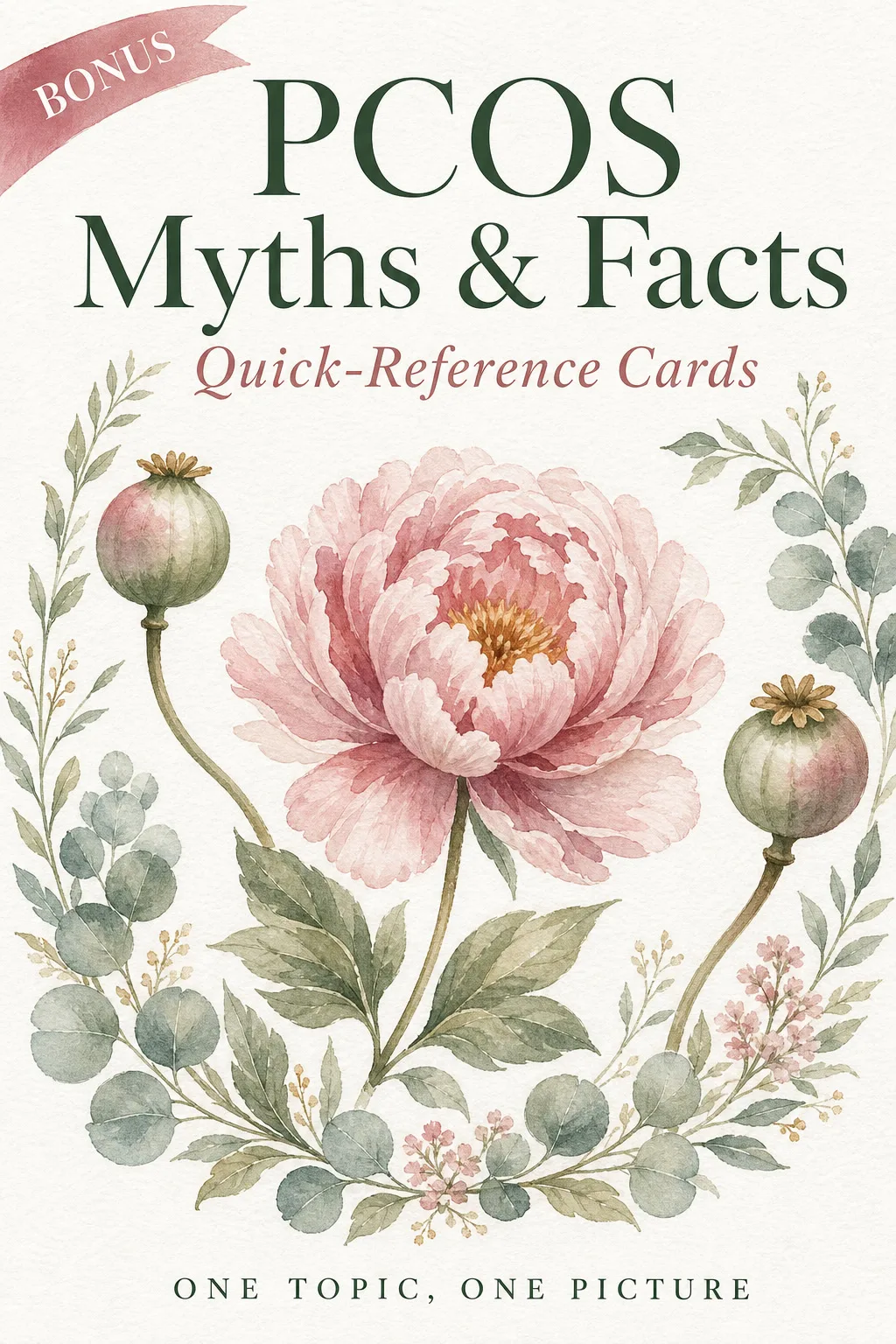
PCOS Myths & Facts: Quick-Reference Cards

BONUS 2: «PCOS Myths & Facts: Quick-Reference Cards»

Value on its own: US$ 14.90

The most common myths set against the facts in two columns, on printable cards to keep at hand when the internet says ten different things.

PCOS Illustrated with 2 Free Books

  • PCOS Illustrated: 67 illustrated pagesUS$ 63
  • BONUS 1: PCOS Picture Quiz: 60 Questions with Drawn AnswersUS$ 17.90
  • BONUS 2: PCOS Myths & Facts: Quick-Reference CardsUS$ 14.90
  • High-resolution PDF to printIncluded
Total value US$ 95.80
YOUR PRICE:
US$ 27
You save US$ 68.80
YES, I WANT PCOS ILLUSTRATED FOR US$ 27

📄 This is a digital PDF book sent to your email: nothing is printed or shipped.

Secure purchaseEncrypted payment30-day guarantee

PDF by email: We email you PCOS Illustrated as a PDF, together with the two free books. It's a single payment: no installments, no extra charges.

Who This Book Is For

Your daughter has just heard the word

Your daughter has just heard the word

She came home from the GP with 'PCOS' and a leaflet. The book draws the map (cycle, hormones, insulin) so you can follow it together.

A follow-up appointment is coming

A follow-up appointment is coming

The report has SHBG, LH, FSH and HbA1c on it. Each one is drawn on its own page, so you get to the appointment with clear, ordered questions.

You heard it years ago

You heard it years ago

You were told about PCOS long ago and perimenopause is getting close. The life-stages part shows what changes and which checks are worth asking about.

Everything You Get Today

US$ 95.80US$ 27
YES, I WANT PCOS ILLUSTRATED FOR US$ 27

📄 This is a digital PDF book sent to your email: nothing is printed or shipped.

30DAYS
GUARANTEE

30-Day Guarantee

Try PCOS Illustrated for 30 days, bonus books included.

We refund everything if the file won't open, if the book isn't what you see here, if you were charged twice or if the email doesn't arrive. Just email us.

You pay once. No subscriptions.

Frequently Asked Questions

Is it for me if I'm not from a health background and I'm reading it for my daughter?

Yes. It's written in plain English for someone outside medicine, with one drawing per topic. Every term is explained the first time it shows up.

Where does the content come from?

It's checked against the 2023 International Evidence-based Guideline for PCOS and the current Australian patient information from Jean Hailes and healthdirect. It isn't a diet book and it doesn't sell supplements.

Is it official material?

No. It's an independent educational book. The sources are named to show where the information comes from, not to claim any endorsement.

Does it replace seeing a doctor?

No. It's health education, not medical advice, a diagnosis or a treatment plan. Every page on tests, signs or treatment ends with the same reminder: talk it through with the doctor.

Is it written for Australia?

Yes. It follows the Australian care path (GP first, then a referral if needed) and explains the pathology report terms with the units Australian labs usually use, such as nmol/L for testosterone and SHBG. The quiz questions were written for this book.

When and how does it arrive?

As a PDF by email, together with the 2 bonus books.

Do I have to pay every month?

No. It's a one-off payment, with no subscription.

Can I have it on paper?

It comes as a PDF by email, which prints well at home or at a print shop, so you can take it to the appointment.

How does the refund work?

You have 30 days. We refund everything if the file won't open, if the book isn't what you see on this page, if you were charged twice or if the email doesn't arrive: just email us.

Before You Close This Page

No more rereading websites and remembering none of it.

LH, FSH and SHBG, each drawn on its own page.

You get to the next appointment knowing where everything sits.

Drawings make studying faster.

The book is right below.

One-time payment: US$ 27 · Guarantee: 30 days · PDF by email

YES, I WANT PCOS ILLUSTRATED FOR US$ 27

📄 This is a digital PDF book sent to your email: nothing is printed or shipped.